
CN | EN

Every day, procurement teams type that question into a search bar. As a CMC plant that has been in this business for more than fifty years, let us start with the honest answer:
“Which brand is best” is the wrong question to ask.
Because “best” in CMC is never absolute. The same lot that performs beautifully as a stabiliser in a yoghurt can drop out of suspension completely in a drink at pH 3.5. The same grade that is excellent value in a detergent line would be a serious compliance failure in an injectable formulation. Quality, in practice, is the fit between a set of specifications and your application, your process and your regulatory market.
So this article is not a “Top 10 CMC Brands” list — most of those are paid placements. What we want to give you is three things: the five criteria that actually separate a good CMC supplier from an average one, an objective picture of the brand landscape, and a concrete method for verifying any supplier — including us.
1. Quality Comes Down to Five Things
1.1 Which standard, and which edition
For food grade, the reference is GB 1886.232-2016 (China’s national food safety standard for sodium carboxymethyl cellulose); for export you also need conformity with E 466 (EU), FCC (US) and JECFA / INS 466. For pharmaceutical grade, it is the relevant monograph in the Chinese Pharmacopoeia, USP/NF or EP, plus the registration status on CDE (China’s Center for Drug Evaluation) excipient platform.
The usual failure here is not the absence of a standard — it is an outdated edition, or a food-grade claim backed by an industrial-grade product. Some quotations say only “CMC, national standard” without naming the grade or the edition. That vagueness is itself a warning sign.
1.2 Batch-to-batch consistency, not single-lot results
This is the real dividing line between a serious plant and an ordinary one.
A single impressive lot is not difficult. Reproducing it on lot 50 is. The test is straightforward: ask for the measured COA values of 3–5 consecutive lots of that grade — not “typical values” — and put degree of substitution, viscosity, pH, moisture and chloride side by side. If DS drifts by more than ±0.03 between lots, or viscosity by more than ±10%, process control is not where it should be.
1.3 Desalting depth and purity
The CMC reaction leaves sodium chloride and sodium glycolate behind. How thoroughly the washing stage removes them sets the ceiling on purity. This is precisely where low-cost industrial grades cut corners.
Insufficient purity causes a chain of problems: food grade fails heavy-metal and microbiological limits; battery grade suffers from metallic contamination; paper and coating lines see fisheyes, gel particles and blocked nozzles. Do not stop at “purity ≥98%” on the datasheet — ask whether that is on a dry basis or as-is, and which test method was used.
1.4 Technical response, not just shipping capability
CMC is easier to get wrong in use than on paper. Dosed incorrectly, it forms lumps. In a high-salt system, it can salt out. Blended at the wrong ratio with other hydrocolloids, the system separates.
A supplier who can explain why a grade is wrong for your process — and which one you should switch to — is worth far more than a USD 200/t discount. There is a simple test: ask a specific technical question and see whether you get a datasheet back, or a solution.
1.5 Regulatory and documentation capability
In export business, arrival at port is only the beginning: SDS, COA, Certificate of Origin, Health Certificate / Free Sale Certificate, Halal and Kosher certificates (and whether the issuing body is recognised in your destination market), plus REACH-related monomer registration information and an SVHC statement.
Incomplete paperwork means cargo sitting at the port. Confirm this at quotation stage, not after booking.
2. The Brand Landscape, Stated Fairly
International brands — Ashland’s Blanose and Aqualon ranges, Nouryon’s Akucell and Cekol, CP Kelco’s CEKOL, Japan’s Daicel and DKS — are strong where it counts most in regulated applications: pharmacopoeial compliance systems, decades of formulation data, and the credibility that comes from being audited by global customers. That premium is worth paying if your end customer is a European or American pharmaceutical company or an international food group.
Chinese manufacturers hold the largest CMC capacity in the world and effectively set the price in technical grades — detergents, paper, oilfield, ceramics. In recent years they have moved up quickly in food and battery grades, and the leading plants now match imported material on batch consistency and desalting depth.
Two gaps remain. First, the spread between Chinese plants is enormous — the leaders and the tail can differ by an order of magnitude. Second, the average level of documentation and technical support is lower. Both gaps happen to be measurable — which takes us back to the five criteria above.
3. Who Fortune Biotech Is
If we are going to talk about which brand is good, we should put our own cards on the table and let you measure us with the same ruler.
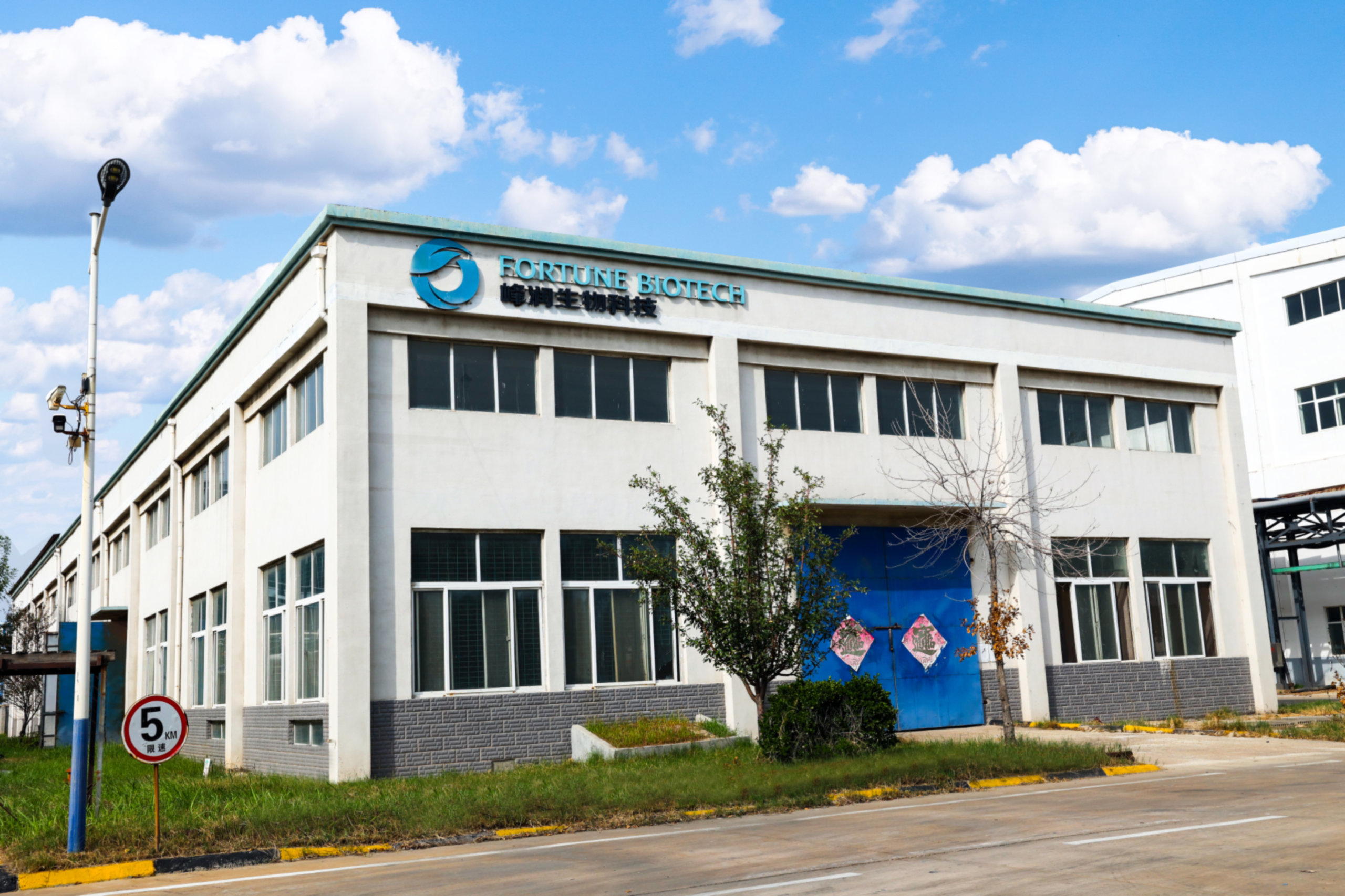
Fortune Biotech (Jining Fortune Biotech Co., Ltd.) is based in Zhanghuang Industrial Park, Yutai County, Jining, Shandong Province, and has been making CMC and PAC for over fifty years:
| Item | Detail |
| History | Origins trace to Shandong Yutai Chemical Plant, founded in 1970; designated a national CMC production plant in 1979; joint venture with UK-based Orient Biotech in 2001; new plant built in 2013 with a RMB 170 million investment, commissioned in 2015 |
| Capacity | Approximately 20,000 tonnes per year; fully automated lines under DCS control, closed process from raw material intake to finished packing; packing system built to GMP standards |
| Scale | 108 acres, total assets of RMB 130 million, 160 employees including 22 in R&D |
| Technical reach | Purity up to 99.5%, viscosity above 10,000 mPa·s, degree of substitution up to 1.2 (acid-resistant type) |
| Certification | ISO 9001, ISO 22000, ISO 14001 and occupational health & safety management systems; Kosher, Halal and BRC |
| Customers | More than 3,000 customers in over 60 countries and regions |
| Industry standing | Council member of the China Cellulose Industry Association |
In one sentence: we are neither the most expensive option nor a trader who will quote you anything — we are a source factory that controls its own process from raw material to finished goods, and treats desalting and batch consistency as core process metrics rather than marketing language.
4. Our Product Matrix: Which Grade for Which Application
Selecting CMC is essentially a three-dimensional choice: degree of substitution × viscosity × purity. At Fortune Biotech, grades are grouped by DS, following the convention used across the industry:
- Type 6 (DS 0.75–0.9) — general purpose; good water solubility and high thickening efficiency, covering most conventional duty.
- Type 9 (DS >0.9) — acid-resistant; noticeably more stable in acidic and high-salt systems, suited to acidified dairy drinks, certain sauces and specific industrial systems.
By application:
| Grade | Main applications | Critical controls |
| Food grade | Dairy and acidified milk drinks, yoghurt, ice cream, bakery, sauces, noodles | Purity (up to 99.5%), heavy metals, microbiological limits, solution clarity; conforms to GB 1886.232-2016, E 466, FCC |
| Pharmaceutical grade | Tablet binding, suspension stabilising, gels and ointments, ophthalmic preparations | Pharmacopoeial conformity, microbial limits, lot-to-lot consistency |
| Industrial grade | Ceramic green-body strength, glaze suspension, textile sizing, coatings thickening, paper sizing and coating | Dissolution rate, absence of fisheyes/gel, viscosity retention |
| Detergent grade | Anti-redeposition in powder and liquid detergents, thickening systems | Whiteness, particle size distribution, salt content |
| Drilling grade / PAC | Fluid-loss control, viscosification and rheology control in water-based muds | Salt and calcium tolerance, thermal stability, API fluid loss |
| Battery grade | Aqueous anode binder and thickener for lithium-ion cells | Purity, magnetic/metallic contamination control, viscosity consistency |
We also supply PAC (polyanionic cellulose) — CMC with additional anionic groups, giving better tolerance of divalent salts and higher temperature stability. In high-salinity brine and hot, deep sections, PAC is usually the correct answer rather than CMC. The two are not interchangeable on a like-for-like dosage basis.
5. How Batch Consistency Is Actually Delivered
Claiming “good quality” is easy. Explaining what backs the claim is harder. Ours rests on four layers:
Layer one — process control. DCS governs temperature and ratios through alkalisation, etherification and neutralisation, with parameters logged. Automated lines reduce the variation introduced by manual intervention, and allow multi-grade switching without sacrificing consistency.
Layer two — no shortcuts in washing. The desalting stage is one of our core operations, and it is the precondition for reaching 99.5% purity and for entering food and battery grades at all. It is also the easiest place to “save cost” in a price war. We do not.
Layer three — testing and retained samples on every lot. Each lot is tested in full against specification before shipment, with COA and SDS travelling with the goods. Retained samples let us trace any issue back to a specific lot.
Layer four — documentation and compliance. Food grade ships with Health Certificate / Free Sale Certificate; Halal and Kosher documentation is provided according to destination requirements. Any change in raw material or process is notified to the customer in writing in advance, with re-submitted samples for confirmation.
6. When We Are the Right Choice — and When We Are Not
This section may not read like company marketing, but we think candour is more useful than spin.
Where we fit well:
- You need food, pharmaceutical or battery grade and care about batch consistency and desalting depth;
- You export, and need a complete regulatory file package (Halal/Kosher, Health Certificate, SDS, COA);
- You want factory-direct supply with stable monthly volumes from 20,000-tonne capacity, under a long-term contract;
- You need custom specifications — ultra-high viscosity, a specific DS, a particular particle size — or OEM/ODM private label;
- Your current supplier keeps drifting between lots or shipping material that does not match the sample, and you need a second source.
Where we may not be the best fit:
- You need a few kilograms for laboratory work — please use a local distributor; our MOQ and cross-border logistics do not make sense at that scale;
- You require local stock in your country with same-week pickup — we do not operate overseas warehouses, and lead time follows production scheduling (roughly 7–15 days for standard grades);
- You need one-stop purchasing across many chemical categories — we focus on cellulose ethers and do not act as a general consolidator;
- Your application is highly price-sensitive, low-end industrial and evaluated on unit price alone — cheaper material does exist, but the saving is normally taken out of purity and desalting. That is a trade-off for you to weigh, not for us to disguise.
7. Measure Us With the Same Ruler
This last part is what we most want you to take away: a question list you can send to any supplier, including Fortune Biotech.
- What is the full title and edition of the standard you manufacture to? (For food grade, confirm GB 1886.232-2016 is the current edition.)
- Is the raw material purified cotton, cotton linters or wood pulp — and what is the alpha-cellulose content?
- Can you provide measured values for 3–5 consecutive lots of this grade, rather than typical values?
- What are the test conditions for viscosity (concentration, temperature, rest period, instrument)?
- Does your in-house testing cover heavy metals and microbiologicals? May we see calibration records?
- What are the certificate numbers and scope — is the certified entity the manufacturing site or a trading company, and which production line is covered?
- Is your Halal/Kosher certification valid in our destination country, and who is the issuing body?
- What is your annual capacity, lead time for standard grades, and how is allocation handled in peak season?
- What are the packaging specification, moisture protection and container sweat mitigation measures?
- In a quality dispute, what are the agreed arbitration laboratory, sampling plan and response timeframe?
- Do you support plant trials, and what is your sample policy?
- Will you notify us in writing in advance of any change in raw material, formulation or process?
A supplier who answers these clearly, with data that shows real variation between lots, is a supplier worth working with. A supplier with polished answers and identical figures on every lot deserves a second look.
If you wish, send these twelve questions to us exactly as they are. We will answer on the same terms: the exact standard we build to, measured data from consecutive lots, and samples you can verify yourself.
8. Frequently Asked Questions
Q: What is the difference between CMC and PAC — can they be substituted? Both are cellulose ethers. CMC is more economical and hydrates quickly, covering most conventional duty. PAC carries additional anionic groups, giving better tolerance of calcium and magnesium, higher total salinity and higher temperature — which is why it is usually the right choice in high-salinity brine and hot, deep sections. Select on your salinity and temperature window, not on which sounds more premium.
Q: The sample passed but production lots did not. How do we prevent that? Move acceptance upstream into the contract: specify the governing standard, test conditions, sampling method (three-point sampling with quartering reduction) and retention period, with the manufacturer retaining samples against every lot. For a disputed lot, send both retained samples to the agreed third-party arbitration laboratory. What a contract can settle should not be argued over by email.
Q: Is imported CMC still meaningfully better than Chinese CMC? In food, pharmaceutical and battery duty cycles, the gap now shows up mainly in batch consistency, desalting depth and the speed of technical response — not in whether a specification can be met on paper. Leading Chinese plants are already dependable substitutes across conventional and higher-end grades. Judge on consecutive-lot data and a plant trial, not on the country-of-origin label.
Q: Is higher viscosity always better? No. Viscosity must match your process window. Too high, and you fight dispersion, pumping and coating resistance, plus higher drying energy. Too low, and you lose thickening and suspension. Fix the target viscosity band and its tolerance first, then choose the grade.
Q: What are your MOQ and sample policy? Samples are available (freight confirmed by destination). Lead time for standard grades is approximately 7–15 days. MOQ is calculated by grade and packaging specification, and OEM/ODM is open to discussion — please contact us to confirm current scheduling.
Q: What documentation comes with food grade? COA, SDS, Certificate of Origin, Health Certificate / Free Sale Certificate, Halal and Kosher certificates, and a conformity statement for GB 1886.232-2016 / E 466 / FCC. For pharmaceutical grade, the file package is prepared according to your registration requirements.
Conclusion
Back to the title: which CMC brand has the best quality?
If only one answer is allowed, it is this: the one that can hold its batches steady, desalt deeply, complete the paperwork, and let you verify all of it.
Fortune Biotech intends to be that supplier. For more than fifty years we have done one thing — cellulose ethers. From a national designated plant in 1979 to a 20,000-tonne automated facility today, we believe quality is not a slogan but the figures on each COA: figures that can be checked, traced and re-tested.
We will not claim to suit everyone. But if your application is in food, pharmaceutical, battery or export industrial grades, bring the twelve questions from Section 7 and ask us — our answers are written in the data.
| *Fortune Biotech (Jining Fortune Biotech Co., Ltd.) | Zhanghuang Industrial Park, Yutai County, Jining, Shandong, China* |
| CMC / PAC source factory · 20,000 t annual capacity · 3,000+ customers in 60+ countries |