
CN | EN

How to Judge Sodium CMC Quality | CMC Purity and Degree of Substitution Testing Methods
1. The Same White Powder Can Differ Threefold in Quality
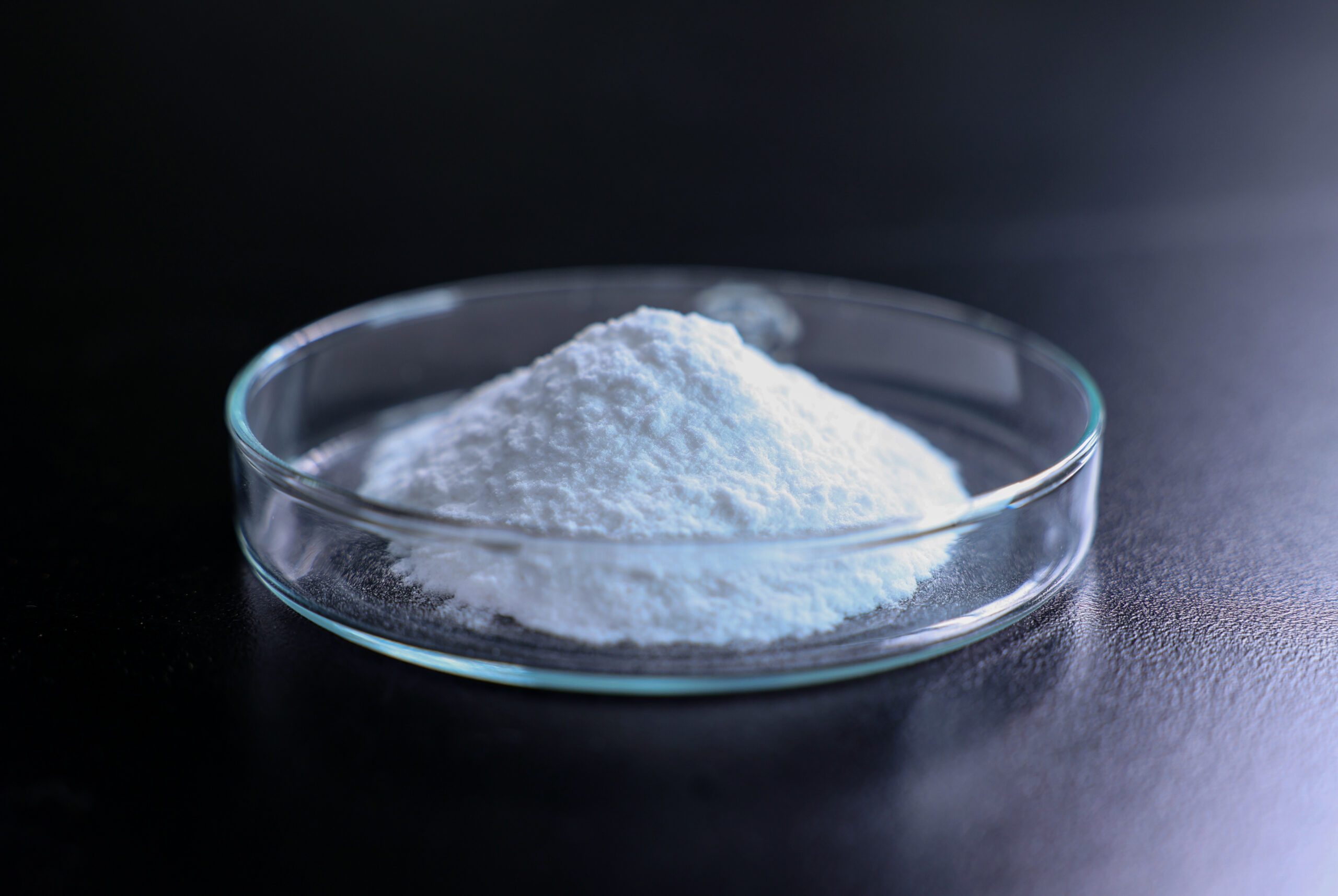
Sodium carboxymethyl cellulose (CMC, international food additive number E466) is a water-soluble polymer produced by alkalizing and etherifying natural cellulose. Its appearance is remarkably plain — a white or slightly yellowish powder, odorless and tasteless. Looking at it, or rubbing it between your fingers, you can barely tell two grades apart.
Yet prices range from roughly RMB 10,000 to over RMB 30,000 per ton, and the quality gap is real. The reason is that CMC quality is not a single dimension but a combination of four variables: purity, degree of substitution, viscosity, and impurities. Two bags both labeled “food grade CMC” may look identical, but one is a high-purity, evenly substituted, stable material — while the other has salt blended in, a broad DS distribution, and viscosity “propped up” by a high-viscosity, low-purity trick.
What makes it worse is that the second bag’s COA often passes too. Every individual indicator can sit just inside the limit, but the combination simply doesn’t work: it dissolves slowly, forms fish eyes, separates after two days, and every new batch forces a reformulation.
So the real difficulty in “telling good from bad” is not whether a test report exists. It is whether you know how to read that report — and whether you can verify the sample yourself once it arrives.
2. Step One: Read the COA Properly, Not Just “Do You Have One?”
Eighty percent of buyers receiving a COA (Certificate of Analysis) check only three things: there is a stamp, there is a date, and the results say “pass.” That is nowhere near enough. A COA worth trusting needs scrutiny in at least five places:
| What to check | What a proper one looks like | What should raise suspicion |
| Test basis | Explicitly cites GB 1886.232-2016, USP, FCC, or E466 | Only “enterprise standard,” or no basis at all |
| Batch number and dates | Batch number, production date, and test date all present and mutually consistent | Batch number doesn’t match the bag, or test date precedes production date |
| Completeness of key items | Purity, DS, viscosity, moisture, pH, chloride, sodium glycolate, heavy metals, total plate count | DS missing, sodium glycolate missing, microbiological items missing |
| Viscosity test conditions | States concentration (1% or 2%), temperature (25 °C), spindle and speed | Only “≥8000 mPa·s” with no method stated |
| Heavy metals and microbiology | Actual measured values stated item by item | Everything waved through with the word “complies” |
The single most overlooked detail here is that viscosity must come with its test conditions. The same sample measured at 2% versus 1% can differ by an order of magnitude, and 25 °C versus 40 °C is a completely different number. A viscosity figure with no concentration and no temperature tells you nothing at all.
One more piece of field experience: lay three consecutive batches of COAs side by side. If the measured viscosity and DS values are nearly identical across all three — down to the second decimal place without moving — that is a reason for suspicion, not confidence. Real industrial production fluctuates normally. A report that looks too perfect may simply be the same template with a new batch number typed in.
3. Five Hard Indicators: How to Read the Truth in the Numbers
CMC has five core indicators, each tied to a concrete consequence:
- Purity (assay): Food grade requires ≥99.5% on a dry basis. Insufficient purity means more residual salts — affecting taste and system stability in food, and electrochemical performance and electrode adhesion in batteries. Purity is the foundation; if the foundation is weak, no other indicator can save it.
- Degree of Substitution (DS): Measures how many carboxymethyl groups sit on the cellulose molecule, and governs solubility, thickening power, and acid/salt tolerance. Food grade typically runs 0.6–0.95; a higher DS generally means fuller dissolution and a more stable system. Too low a DS, or too broad a distribution, produces particles that partly dissolve and partly don’t.
- Viscosity: Measured on a 1% or 2% solution, offered in low-, medium-, and high-viscosity series. Higher is not automatically better — what matters is that it matches your process and stays stable from batch to batch.
- Moisture (loss on drying): Generally ≤10%, with premium products controlled lower. High-moisture material cakes easily, risks mold, and is hard to weigh accurately.
- Impurity profile: Chloride (as NaCl), sodium glycolate, heavy metals (Pb ≤2 mg/kg, As ≤3 mg/kg), ash, and total plate count. These reveal a manufacturer’s process refinement and raw-material cleanliness most clearly — they add no performance, but they decide whether your product gets blocked at the testing stage.
In one sentence: purity shows the foundation, DS and viscosity show the capability, and impurities and heavy metals show the safety. Miss any one and it isn’t high quality.
4. Eight Quick Tests You Can Run On the Spot
Not everyone has a rotational viscometer. But the eight methods below need only a beaker, a digital scale, and a bottle of water — more than enough to screen out the obviously unacceptable material on day one with the sample.
1. Cold-water dissolution watch (most direct). Sprinkle 1 g of sample slowly into 100 mL of room-temperature water while stirring. Good material disperses evenly and thickens progressively. Poor material forms “fish eyes” — the outer layer swells into a gel skin that traps dry powder inside, creating translucent lumps that resist stirring for a long time. Heavy fish-eye formation points to problems with particle-size distribution or surface treatment, and in production it causes uneven local concentration.
2. Finger-rub test. Roll a pinch of dry powder between your fingertips. Good material feels smooth and fine. Material blended with salt, or coarsely milled, has a distinct gritty, granular feel.
3. Settling and separation test. Prepare a 1% solution in a clear bottle and leave it for 24 hours. Good material stays uniform with no separation and no visible sediment. Poor material develops a clear liquid layer on top, sediment at the bottom, or a two-phase “jelly plus water” appearance.
4. Visual clarity test. Pour the 1% solution into a glass and hold it to the light. The clearer it is, the fewer insolubles and the cleaner the raw material. Cloudiness or suspended flocs usually means raw-material purity or filtration is falling short.
5. Salt-tolerance mini-test (separates standard from salt-resistant grades). Gradually add salt to a 1% solution up to 5%–8%, stirring as you go. Standard CMC drops sharply in viscosity and may even throw a white flocculent precipitate as salt concentration rises; salt-resistant grades hold steady. If your formulation is itself high-salt (soy sauce, sauces, drilling fluids, certain battery slurries), failing this test makes everything else irrelevant.
6. Acid-tolerance mini-test. Adjust the solution to pH 3–4 with citric or hydrochloric acid, then leave it to stand. Standard CMC tends to precipitate or lose viscosity under acid; acid-resistant grades stay relatively stable. Anyone making acidic beverages or acidified dairy products must run this one.
7. Iodine test for starch adulteration. Add a drop or two of iodine solution (or povidone-iodine) to the solution. A blue-violet color means starch or dextrin has been blended in — CMC itself does not react with iodine. This is the cheapest and most effective way to catch adulteration, and it is exactly how many low-priced lots shave cost.
8. Burn-and-ash test. Burn a small amount of sample on a stainless steel spoon. More residual ash means more inorganic salt. High-purity, cleanly processed CMC leaves very little residue; salt-loaded material leaves an obvious white ash.
And one method that runs through all of the above: side-by-side comparison. Always keep a known-good sample as your reference. Same concentration, same water temperature, same stirring time — set the two beakers next to each other and look: dissolution speed, body, clarity, fish eyes. The difference is plain. That is more convincing than any report.
5. Six Common “Pass-Off” Tricks
Know the playbook and you won’t get played. Six patterns recur constantly in the CMC market:
- Low DS sold as high DS. Viscosity is built up to compensate, so nothing shows at first — until the material meets an acidic or high-salt system.
- Industrial grade sold as food or pharma grade. Chemically identical in appearance; the difference is heavy metals, arsenic, microbiology, and endotoxins. This risk never appears in your bench trial — only in customer complaints and customs rejections.
- Salt loading. Adding NaCl or sodium sulfate drops cost per ton immediately, while purity, clarity, and salt tolerance all suffer.
- Starch, dextrin, or cheap gum blending. One drop of iodine exposes it. This is the most common tactic behind low-priced lots.
- High viscosity, low purity. Selling on a single headline number — “viscosity above ten thousand” — while hiding insufficient purity. The buyer orders on that figure, then is forced to increase dosage, so the real cost ends up higher.
- Batch blending plus recycled COA templates. Different batches, even different grades, blended into one lot, with the analysis report reused from a template and a new batch number typed in. Passes short term; collapses long term.
All six share one trait: none of them can be caught by looking. They can only be caught by testing.
6. From Sample to Mass Production: A Three-Step Validation
The most reliable way to judge quality is not to trust anyone’s claim, but to validate inside your own system. Three steps:
| Stage | Quantity | What you test | Pass criteria |
| Bench trial | 1–2 kg | Run it in your real formulation; check dissolution, viscosity, stability, appearance | All targets met, no meaningful difference from the reference sample |
| Pilot scale | 50–200 kg | Confirm consistency after scale-up; run it through the actual line | Deviation from bench data within an acceptable range |
| First production lot | Full batch | Full-panel testing plus retained sample | Matches the pilot sample; retained for future batch comparison |
The critical action is retaining samples. Keep one sealed sample from every lot, labeled with batch number and date. When a problem appears later, you can trace it immediately. Do this, and a supplier’s quality commitment has teeth. Skip it, and every dispute becomes one party’s word against another’s.
7. Why Fortune Biotech Invites You to Verify
Having laid out the methods, here is the practical reality: most suppliers will hand you a report, but very few will let you verify.
Fortune Biotech (Jining Fortune Biotech Co., Ltd.) stands behind its material on three counts, all of which you can check for yourself.
1. A traceable history. The company’s origins go back to the Yutai Chemical Plant, founded in 1970 in Shandong. In 1979 it was designated a national CMC production plant — a pioneer of China’s CMC industry and a council member of the China Cellulose Industry Association. More than 40 years doing one thing: cellulose ethers. That focus is itself the hardest quality endorsement there is.
2. Verifiable capacity and process. Based in Jining, Shandong, the company runs 20,000 tons per year of CMC capacity with annual output value of roughly RMB 400 million. The plant operates under a DCS automatic control system, and the packaging line is designed to GMP standards — fully enclosed, automated production from raw material feed to finished packaging. This is precisely the hardware prerequisite for “batch 1,000 identical to batch 1” — the batch consistency emphasized throughout this article.
3. Verifiable specs and certifications. Key indicators: purity up to 99.5%, viscosity up to above 10,000 mPa·s, degree of substitution above 1.2, with impurities and heavy metals controlled to food, pharmaceutical, and battery-grade requirements. The company holds ISO9001, ISO22000, ISO14001, and ISO18001 certification, plus Kosher, Halal, and BRC certification. Its products serve more than 3,000 customers in over 60 countries.
Equally telling is the product matrix. Fortune Biotech splits CMC by application: food grade, pharmaceutical grade, toothpaste grade, battery grade (lithium-ion anode binder), VoxelCel™ 3D-printing grade, ceramic grade, coating grade, and PAC (polyanionic cellulose for oil drilling). This matters: a manufacturer with one product “for everything” usually means nothing is done well. Willingness to build grades by scenario shows a supplier that genuinely understands how indicator priorities differ across industries.
On verification, Fortune Biotech’s position is straightforward: samples and complete COAs are available, customers are welcome to take their own samples for third-party testing, and OEM/ODM is supported — from specification and viscosity/DS customization through packaging and labeling.
8. Conclusion
“How do you tell good CMC from bad” is not really a chemistry question. It is a set of purchasing actions:
Read the report (check the basis, the test conditions, and the trend across at least three batches) → run the quick tests (dissolution, fish eyes, clarity, salt tolerance, iodine, ash) → validate on the line (bench trial, pilot scale, retained samples).
Get through all three and you avoid eighty percent of the pitfalls. And the supplier willing to walk those three steps with you — and to survive every one of them — is the one worth a long-term partnership.
Don’t just read the report. Let the sample speak. Fortune Biotech offers free samples, complete COAs, and competitive quotations, and welcomes customers to take their own samples for third-party comparison testing. Website: sdfrchem.com | Email: sales@sdfrchem.com Factory tel: +86-0537-6106347 | Sales tel: +86-0531-61389010 Address: North Shengfa Road, Zhanghuang Town Industrial Park, Yutai County, Jining, Shandong, China