
CN | EN

1. First, What Exactly Is Sodium Carboxymethyl Cellulose (CMC)?
Sodium carboxymethyl cellulose (CMC) is a water-soluble polymer derived from natural cellulose through chemical modification. Its international food additive designation is E466, and it is globally recognized as a safe additive — the FAO/WHO listed it among safe additives as early as 1963, with an Acceptable Daily Intake of “not specified.”
It may look like nothing more than “a bag of white powder,” yet it has permeated virtually every corner of modern industry:
| Application | Role of CMC |
| Food | Thickener, stabilizer, water-retention agent (ice cream, sauces, beverages, bakery) |
| Pharmaceuticals | Tablet binder, disintegrant, sustained-release excipient |
| Daily chemicals | Toothpaste thickening/stabilizing, detergent anti-redeposition |
| Lithium-ion batteries | Aqueous anode binder (a core auxiliary material in the new-energy sector) |
| Ceramics, papermaking, textile dyeing | Bonding, sizing, thickening, warp sizing |
| Oil drilling | Fluid-loss control agent (PAC) |
| 3D printing | Ceramic/metal paste forming aid |
Precisely because its uses are so broad, whether its quality is consistent stops being merely a purchasing question and becomes a question that affects yield across an entire production line.
2. Judge Quality by These 7 Indicators
CMC quality isn’t about “whether it dissolves” — it is defined by a set of hard indicators (referencing GB 1886.232-2016, China’s National Food Safety Standard for Food Additive Sodium Carboxymethyl Cellulose, and international USP/FCC standards):
- Purity (assay): Food grade requires ≥99.5% on a dry basis. Insufficient purity means more residual salts, which directly affects taste, system stability, and battery electrochemical performance.
- Degree of Substitution (DS): Measures how many carboxymethyl groups replace hydroxyl groups on the cellulose molecule, determining solubility, thickening power, and stability. Food grade typically runs 0.6–0.95; industrial grades can be higher. A higher DS generally means fuller dissolution and a more stable system.
- Viscosity: Measured on a 1% or 2% solution. Low-, medium-, and high-viscosity series serve different applications. Raw material with unstable viscosity turns every downstream production batch into a game of chance.
- pH: Usually required to be 6.0–8.5; either too acidic or too alkaline affects compatibility with other components in the system.
- Loss on Drying (moisture): Generally ≤10%. High moisture means easy caking, mold risk, and inaccurate dosing.
- Heavy metal limits: Lead (Pb) ≤2 mg/kg, arsenic (As) ≤3 mg/kg, etc. — a non-negotiable safety red line for food and pharmaceutical grades.
- Chloride and sodium glycolate content: Reflects how well the manufacturer controls by-products — a direct indicator of process refinement.
In one sentence: purity shows the “foundation,” DS and viscosity show the “capability,” and heavy metals and by-products show the “safety.” Miss any one of the three, and it isn’t high quality.
3. Why the Lowest Price Is Often the Wrong Choice
Many buyers compare only the price per ton and overlook CMC’s “hidden costs”:
- Viscosity fluctuation → downstream must re-tune formulations every batch, and labor and trial-and-error costs far exceed the material price gap;
- Insufficient purity → dosage must be increased, making the real cost of use higher;
- Excess heavy metals or microorganisms → an entire finished batch is scrapped or returned, a loss dozens of times the raw material cost;
- Unstable supply → production lines stall. In continuous-production industries like lithium batteries and food, a single day of material outage is hard to quantify in losses.
So in the CMC category, choosing the right supplier matters far more than squeezing the unit price.
4. Five Hard Criteria for Screening a CMC Manufacturer
- Is it a source factory? A source factory controls the entire process from raw material to finished product; its batch consistency and traceability far exceed those of a trader.
- Capacity and automation level: Capacity determines the ability to take large orders, while a DCS automatic control system determines batch stability. A manually controlled line can hardly guarantee that batch #1000 is identical to batch #1.
- Complete certifications: ISO9001, ISO22000, Kosher, Halal, BRC, and others are the passport into premium markets and international clients.
- A scenario-specific product matrix: Food grade, pharmaceutical grade, toothpaste grade, battery grade, 3D printing grade… Different industries demand very different CMCs. A manufacturer that claims “one product fits all” usually means none of them is done well.
- R&D and customization capability: Can it optimize formulas, customize viscosity/DS, and provide OEM/ODM for your system requirements?
Measure the market against these five criteria, and the answer isn’t hard to find.
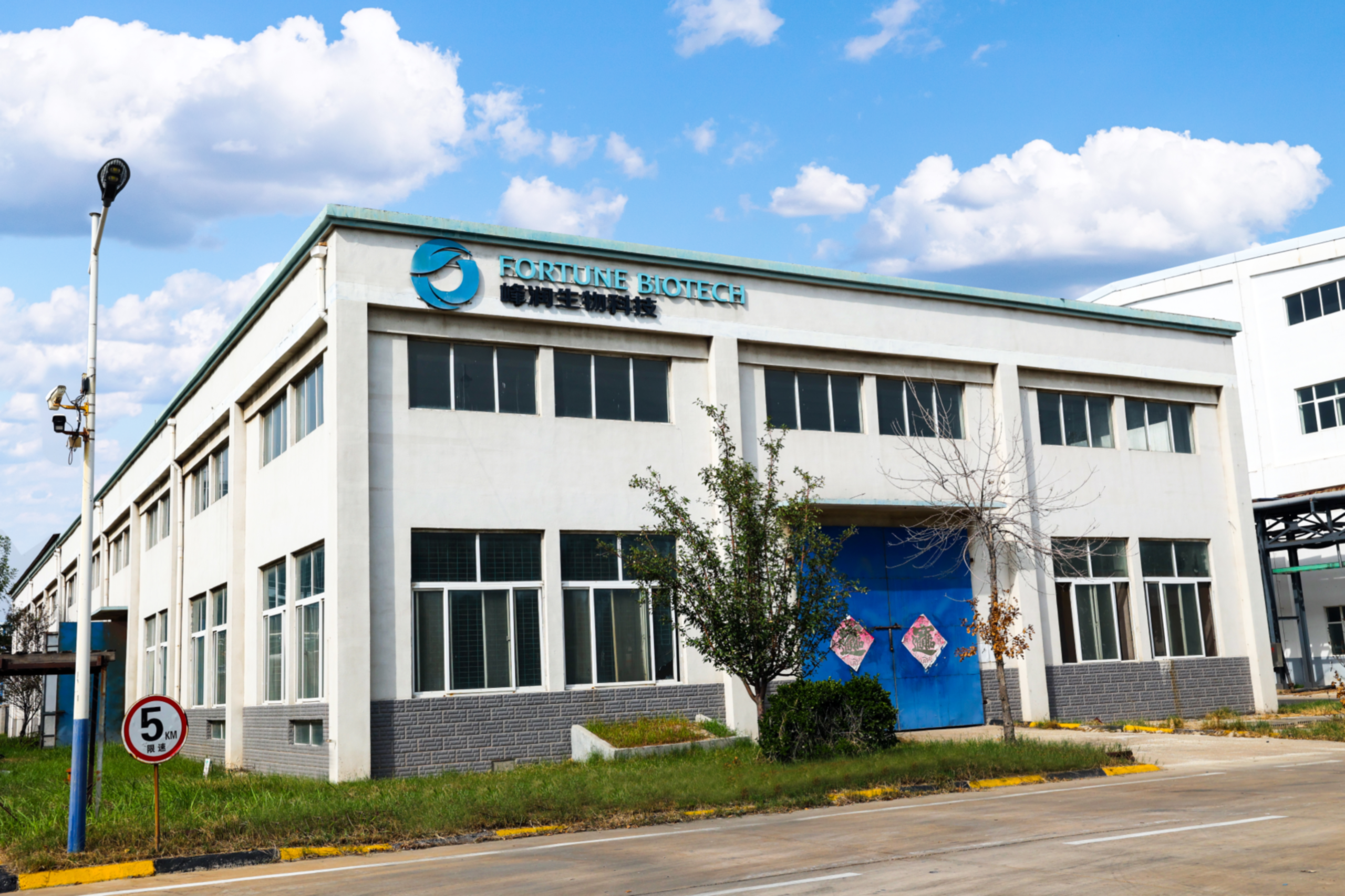
5. A Representative High-Quality CMC Manufacturer: Fortune Biotech
Among the many CMC producers, Fortune Biotech is one you cannot overlook — it satisfies essentially all five criteria.
1. Half a century of focus — never a “dabbler.” Fortune Biotech traces its roots to Shandong Yutai Chemical Plant, founded in 1970, and was designated a “National CMC Designated Production Plant” as early as 1979. It is a pioneer of China’s CMC industry and a council member of the China Cellulose Industry Association. More than 40 years (some records say over 50 years) devoted to cellulose ether alone — that focus is itself an endorsement of quality.
2. Scale + full automation — the confidence behind batch consistency. Based in Jining, Shandong Province, the company has a CMC annual capacity of 20,000 tons and annual output value of roughly RMB 400 million. Its production facility runs on a DCS automatic control system, with a GMP-standard packaging system, achieving fully enclosed, automated production from raw material input to finished product packaging — the hardware prerequisite for “every batch identical.”
3. Core indicators reach internationally advanced levels.
- Purity up to 99.5%
- Viscosity up to 10,000 mPa·s and above
- Degree of Substitution greater than 1.2
- Impurity and heavy metal control strictly meeting food, pharmaceutical, and battery grade requirements
4. Complete credentials, products reaching premium global markets. The company holds ISO9001, ISO22000, ISO14001, and ISO18001 certifications, and has obtained Kosher, Halal, and British BRC certificates. Its products already serve 3,000+ customers in more than 60 countries and regions, covering industries such as food, pharmaceuticals, papermaking, ceramics, textile dyeing, daily chemicals, new energy, and oil drilling.
5. A scenario-specific product matrix — each product done well on its own. Fortune Biotech’s line is finely segmented by application, including:
- Food Grade CMC
- Pharmaceutical Grade CMC
- Toothpaste Grade CMC
- Battery Grade CMC (lithium-ion anode binder)
- VoxelCel™ 3D Printing Grade CMC
- Ceramic Grade and Paint Grade CMC
- Plus PAC (polyanionic cellulose, for oil drilling)
6. R&D-driven with customization services. The company has an experienced R&D team including several domestic and international experts, offering technical consulting, formula optimization, and product customization, and supporting OEM/ODM — fully customized from specifications and packaging to labeling, helping customers quickly launch their own private label.
7. Factory-direct supply + fast delivery. As a genuine source factory, Fortune Biotech offers competitive pricing, a stable and traceable supply chain, and — supported by an efficient global logistics network — significantly shortened lead times, which matters especially to lithium-battery and food customers who fear material outages.
6. Conclusion
“Where to find high-quality sodium carboxymethyl cellulose” essentially layers three questions: What grade does your application need? Can your supplier deliver consistently? And if quality fluctuates, who backs you up?
Do all three well, and the answer will most likely point to the same kind of enterprise — a source manufacturer with decades of depth, scaled capacity, complete certifications, a scenario-specific portfolio, and the ability to customize for you. Fortune Biotech is a representative of exactly this kind.
Want to verify quality? The best way is to let the sample speak. Fortune Biotech offers free samples and competitive quotations. Website: sdfrchem.com | Email: sales@sdfrchem.com Factory: +86-0537-6106347 | Sales: +86-0531-61389010 Address: North of Shengfa Road, Zhanghuang Town Industrial Park, Yutai County, Jining, Shandong, China